


“Audomarois Marais”

Marshland without borders
Spread over 15 communes, it covers over 3,726 hectares with almost 4,000 owners of 13,200 plots of land crossed by 700km of waterways... It takes the form of a clay basin, two to three metres high that acts as an intersection of three different areas. To the west it is bordered by the Artois Hills, where there are fast-flowing rivers such as the Aa and by Flanders in the east. The marshland water flows through the “goulet de Watten” to the north-west on the Flanders maritime plain, reclaimed by the sea in the Middle Ages.
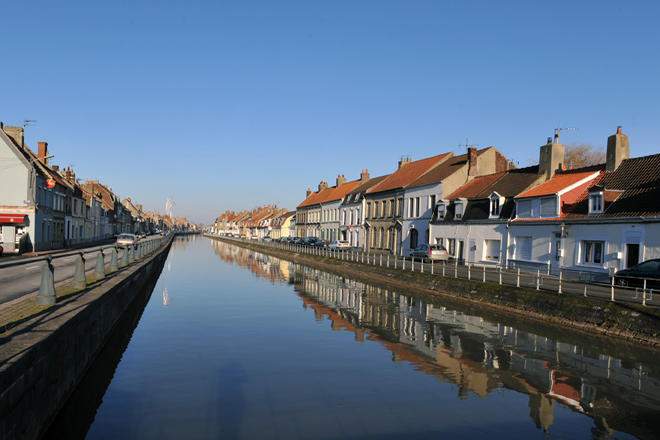
Part of the local population began to live on the marshland during this period, in particular the residents of the Haut-Pont and Lyzel areas of Saint-Omer. The town covered almost 40% of the marshland. The development of the marshland and town were inextricably linked. Around 1100, a first canal, which ran the length of the Artois bank of the marshes, was dug from the town (the “port au lait battu”) to Watten. And then in 1165, a new canal with dykes, crossing the Haut-Pont, was dug. Facilitating the runoff of water, this canal made it possible to use the upper marshland around the town between 1165 and 1215. It stood out thanks to its network of winding canals. It wasn’t until the end of the 18th century and above all the 19th century before the potential of the lowland could be harnessed by building polders, a technique borrowed from the Dutch. Water storage areas used to adjust the water level thanks to dykes and drainage mills were comprised of narrow strips of land, called “lègres”, separated by watergangs. They form a virtually uniform landscape which is particularly evident when seen from the air.
A place of outstanding beauty situated between water, land and the sky
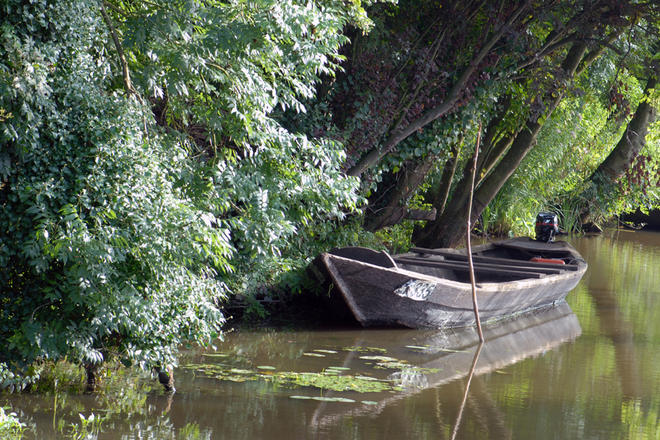
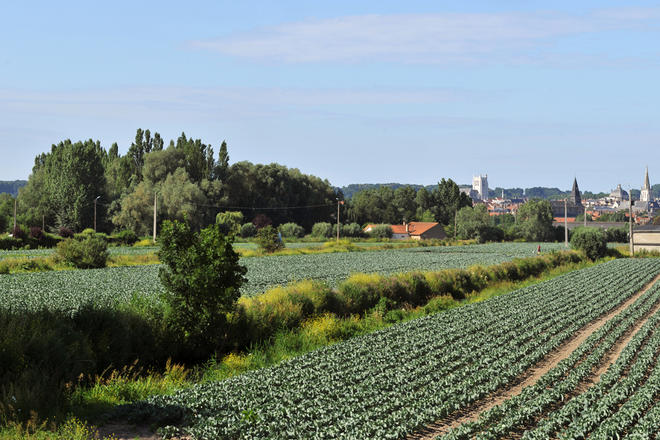
Fruit of the nature of the earth and its history, it has created a wide range of stunning landscapes. The seasons, the light from the sky and the capricious nature of time all contribute towards this permanent renewal. It takes on varying aspects depending on whether you walk, glide through the water in a boat or fly overhead. And the manner in which it is used varies to the same degree. The last cultivated wetlands in France, this is a genuine “land of plenty” where each plot of land can yield several harvests. There are numerous canals and man-made lakes where the plentiful supplies of fish attract anglers. This multifaceted area benefits from several types of protection and management status covering different protected natural environments where a wide range of flora and fauna proliferate. The marshland also provides a permanent home for local people and attracts increasing numbers of visitors in the summer.
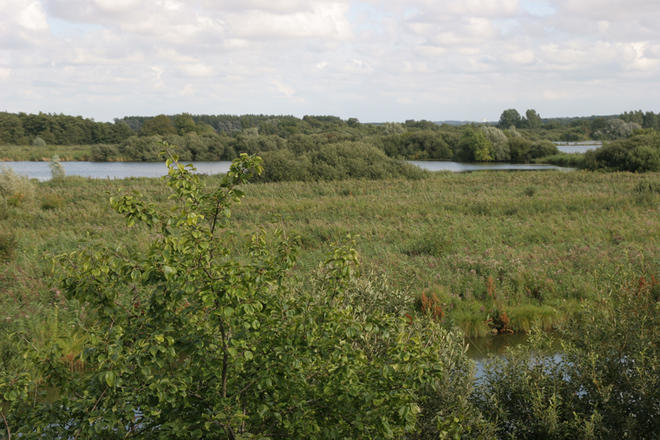
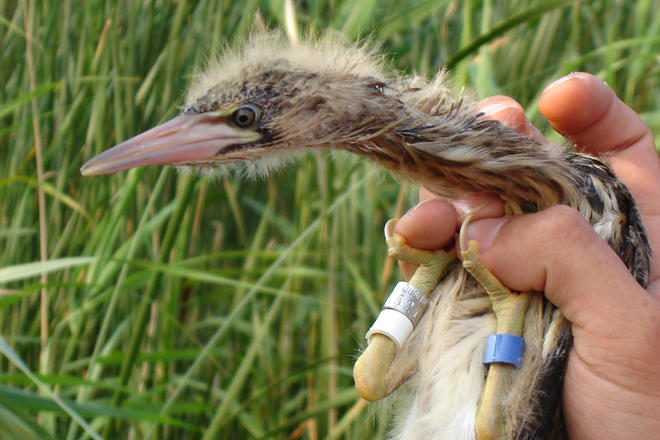
The marshland is made up of various natural environments: reed beds, areas of tall grass, peaty woods, wet meadows, ditches and rivers… A third of France’s aquatic plants in France and half of the region are represented in this area. In total, 400 species of plants and 490 different types of mushrooms have been identified in this area. These environments attract fauna including rare and protected species. There are more than 230 species of birds including migratory species such as the little bittern, the smallest heron in Europe. 70 different types of mollusc and 26 species of fish also form part of the local population. Although incomplete, these inventories, bear witness to the great diversity of the marshland and the responsibility of each individual to work towards the conservation of this common heritage.
The marshland was officially recognised within the framework of the Ramsar Convention in 2008
This international convention on wetlands referred to as the “Ramsar Convention” is an intergovernmental treaty whose goal is the conservation and wise use of wetlands and their resources. In 2013, the “Marais Audomarois” was officially declared a Biosphere Reserve as part of UNESCO’s “Man and Biosphere” programme. This international recognition consequently makes it realistic to envisage sustainable management solutions to ensure the preservation of this exceptional area.
“Les Caps et Marais d’Opale” Regional Nature Park has been striving for several decades to protect, raise awareness and harness the potential of the marshland. More recently, the “Communauté d'Agglomération” has lent its support to ensure the preservation, exploitation and recognition of this truly outstanding area.